
Tuesday, September 6, 2022
Wednesday, October 20, 2021
Russia - Firepower
Rockets and missile TOS-1, Grad, BM-30, S-400, Tu-22, TU-95, Tank, Su-34, ICBM/Sermat all in Action
TOS-1
TOS-1 - 220mm 30 barrel rocket tracked MLRS (Range 3.5km / 2 miles)
.jpg) |
| TOS-1 |
GRAD
 |
| Grad BM21 |
BM30
 |
| BM30 Smerch |
S400
 |
| S400 |
Tupolev U2
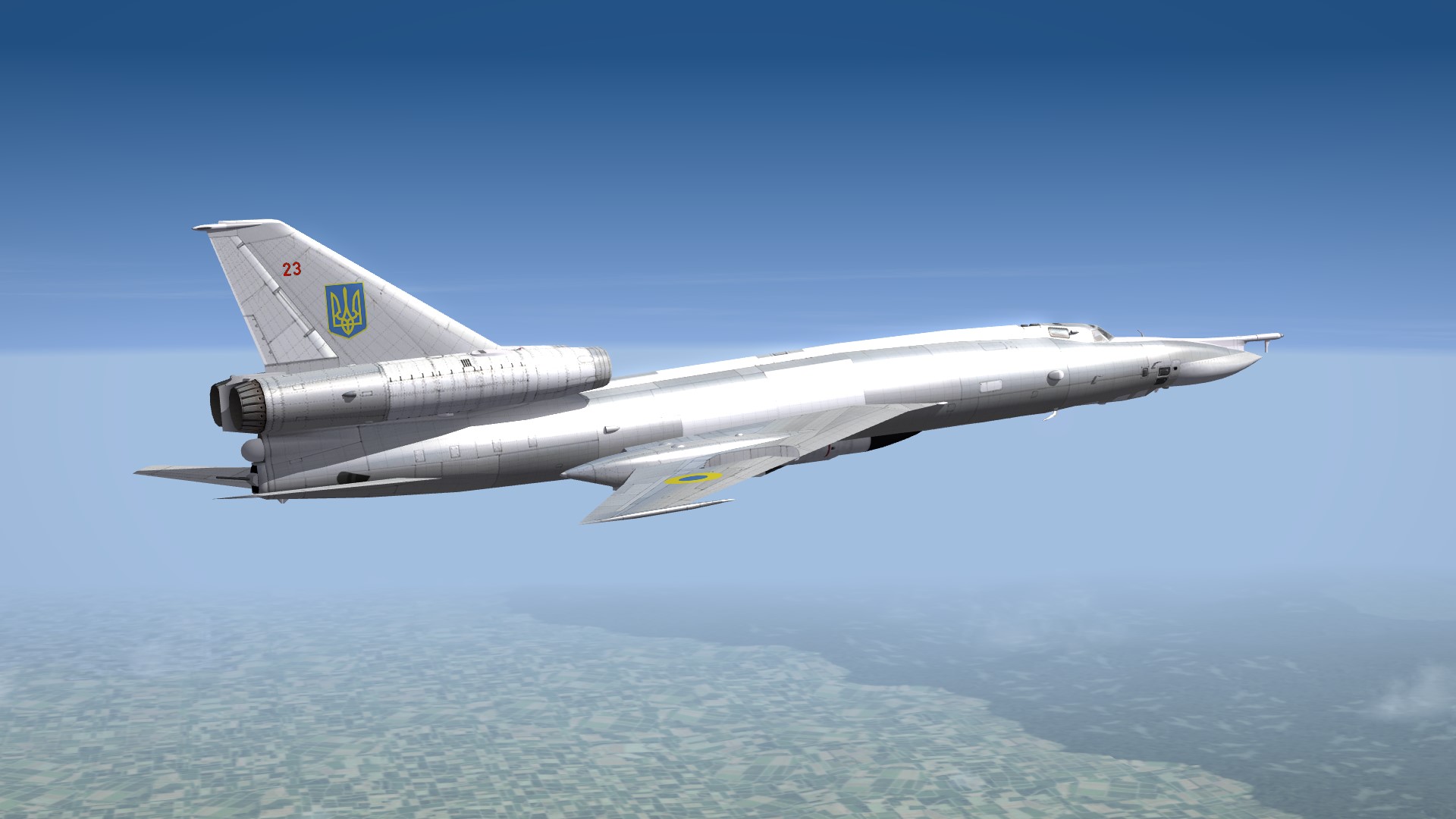 |
| Tupolev TU2 |
Tupolev TU95
 |
| Tupolev TU95 Bear |
Sukhoi SU34
.jpg) |
| Sukhoi SU34 |

Friday, April 16, 2021
Finland - K54 live firing
Source: Puolustusvoimat - Försvarsmakten - The Finnish Defence Forces
Shrieking shrapnel - Finnish field artillery
Battery of Finnish Army field artillery cannons model 130 K 54 fire into the target area where the cameras are waiting. Filmed during Army firing exercise in Rovajärvi, Lapland.
Saturday, March 6, 2021
Wednesday, March 3, 2021
Monday, March 1, 2021
Bangladesh - Artillery Firepower 2021
Source: Everything Video
Bangladesh Army Artillery Power 2021


Self Propelled Artillery
NORA B52 155mm SP (origin Serbia)

Towed Artillery
Type 59 130mm (origin China)
L10A 105mm (origin Italy)
AM-56 A1 105mm (origin Serbia)
Type 96 122 mm (origin China)
Type 83 122 mm (origin China)
Type 54 122 mm (origin China)

Rocket Artillery
T-300 Kaciga MLRS (origin Turrkey)
WS-22 A MLRS (origin China)

Mortars
Type 53 120mm mortar
UMB-52 120mm mortar
Type 87 82mm mortar
Type 93 60mm mortar
Monday, February 15, 2021
Friday, February 5, 2021
Global - Self Propelled Truck Mounted Artillery
Source: The Buzz
Turkey -> YAVUZ MKE | 155mm/ 52 caliber | Range 30-40 km | Rate of Fire: 4-6 rpm
Czech Republic -> DANA M1 | 152mm/39 caliber | Range 20 km | Rate of Fire: 4 rpm
France -> CAESAR 6 X 6 | 155mm/52 caliber | Range 42 km | Rate of Fire: 4-6 rpm
Israel -> ATMOS | 152mm/52 caliber | Range 30-56 km | Rate of Fire: 4-6 rpm
Serbia -> NORA B-52 | 152mm/52 caliber | Range 20-41 km | Rate of Fire: 6 rpm
France -> CAESAR 8 X 8 | 155mm/52 caliber | Range 42-55 km | Rate of Fire: 6 rpm
Slovakia -> ZUZANA | 155mm/45 caliber | Range 40 km | Rate of Fire: 2-6 rpm
South Africa -> RHINO | 155mm/45 caliber | Range 30-50 km | Rate of Fire: 4 rpm
Sweden -> ARCHER | 155mm/52 caliber | Range 30-60 km | Rate of Fire: 8-9 rpm
United States -> BRUTUS | 155mm/36 caliber | Range 24.7-39 km | Rate of Fire: 5 rpm
Wednesday, February 3, 2021
Russia - Multi Launch Rockets
Massive Fire On target! TOS1-A, BM-30 Smerch 9K58, Tornado-G, BM-27 Uragan in Action
BM30 - Smerch
The BM-30 Smerch (Russian: Смерч, "tornado", "whirlwind"), 9K58 Smerch or 9A52-2 Smerch-M is a Soviet heavy multiple rocket launcher. The system is intended to defeat personnel, armored, and soft targets in concentration areas, artillery batteries, command posts and ammunition depots. It was designed in the early 1980s and entered service in the Soviet Army in 1989. When first observed by the West in 1983, it received the code MRL 280mm M1983. It continued in use by Russia; a program to replace it by the 9A52-4 Tornado was launched in 2018
BM21 - Grad The BM-21 "Grad" (Russian: БМ-21 "Град", lit. 'hail') is a Soviet truck-mounted 122 mm multiple rocket launcher. The weapons system and the M-21OF rocket[11] were first developed in the early 1960s, and saw their first combat use in March 1969 during the Sino-Soviet border conflict. BM stands for boyevaya mashina (Russian: боевая машина – combat vehicle), and the nickname grad means "hail". The complete system with the BM-21 launch vehicle and the M-21OF rocket is designated[by whom?] as the M-21 field-rocket system. The complete system is more commonly known as a Grad multiple rocket launcher system. In NATO countries the system (either the complete system or the launch vehicle only) was initially known as M1964. Several other countries have copied the Grad or have developed similar systems.
9A52-4 Tornado The 9A52-4 Tornado is Russia's newest universal multiple rocket launcher. It was designed as a lightweight and universal version of the BM-30 Smerch, dubbed 9A52-2. It was first unveiled in 2007 as a more strategically and tactically mobile launcher, albeit at the expense of a slight reduction in firepower. This model is aimed at replacing the previous generation of Russian multiple rocket launchers, including BM-21 Grad, BM-27 Uragan and BM-30 Smerch. Currently the sole operator is Russian Ground Forces. A version will be approved for export.
TOS-1
TOS-1 (Rusia: ТОС-1 - тяжёлая огнемётная система, Inggris: Heavy Flamethrower System) adalah roket peluncur Soviet 220mm 30-barrel (sistem yang asli, Ob.634 atau TOS-1M) atau 24-barrel (Ob.634B atau KL-1A) dan beberapa senjata thermobaric dipasang di tangki chassis T-72. TOS-1 dirancang untuk mengalahkan personil musuh dalam benteng, di daerah yang terbuka, dan kendaraan lapis baja ringan dan transportasi. Tes tempur pertama terjadi pada tahun 1988-1989 di Lembah Panjshir selama perang Soviet di Afghanistan. TOS-1 ditunjukkan untuk pertama kalinya di depan umum pada tahun 1999 di Omsk.
TOS-1 tidak digunakan oleh unit artileri Angkatan Bersenjata Rusia, tetapi ditemukan dalam unit NBC pertahanan. (Rusia: войскa радиационной, химической и биологической защиты (РХБЗ))
Saturday, January 30, 2021
Russia - Top 3 Artillery Systems - 2S35 | 2S7 | 2S5
Top 3 Russian artillery systems
Source: Russia Beyond
Top 3 Russian artillery systems - Russia Beyond (rbth.com)
Artillery systems play one of the most important roles on the battlefield by safeguarding soldiers from enemy mortars, and by eliminating anti-aircraft systems at distances of up to 50 km.
Koalitsiya-SV 2S35
To beef up Russia’s armory, this month the Defense Ministry ordered the first batch of new Koalitsiya-SV 152 mm self-propelled guns.
The Koalitsiya-SV is set to replace the 2S19 Msta-S howitzer that’s been used by the Russian military since 1989. The new system boasts 52 caliber, 152 mm cannons. They’re equipped with muzzle breaks that reduce the huge recoil from the guns, which can shoot at virtually any angle.

The Koalitsiya-SV is set to replace the 2S19 Msta-S howitzer that’s been used by the Russian military since 1989. The new system boasts 52 caliber, 152 mm cannons. They’re equipped with muzzle breaks that reduce the huge recoil from the guns, which can shoot at virtually any angle.
But more importantly, the weapon has a fire rate of 16 rounds per minute: That’s twice as much as most modern battle tanks can manage.
The Koalitisiya-SV’s main weapon is a 152 mm high-explosive shell, while it can also be armed with laser-guided Krasnopol projectiles that use satellite navigation for precision. The first war machines will join the Russian army’s ranks by 2020.
2S7 Pion

During the Cold War, both Moscow and Washington worked on developing artillery systems that could fire tactical nuclear shells on battlefields. Russian manufacturers managed to create such a system.
The 2S7 Pion can carry up to four 203 mm shells (which is pretty low compared to other artillery systems) that can eliminate targets at a range of 37.5 km.
“After the first successful nuclear tests scientists started working on applying these technologies to all possible weapon systems - even in land mines and tank shells. Yet tests proved that these types of projectiles were not as effective as radioactive clouds that spread over battlefields for kilometers, affecting everything in their paths despite being friend or foe,” Alexei Ramm, military analyst from Izvestia newspaper, told Russia Beyond.
As he mentioned, these tests proved the tactical nuclear weapons to be ineffective, and the Pion artillery system received conventional 203 mm projectiles, instead of mass destruction ones. However, the shells still made the artillery system one of the most powerful in the 20th century.
2S5 Giatsint-S

2S5 Giatsint self-propelled guns
The 2S5 Giatsint-S is another Soviet innovation created to fire nuclear projectiles.
But unlike Pion, this system was charged with 152 mm rounds that could reach up to 28 km. It also carries up to 30 high-explosive shells and can also use heat, cluster, and smoke missiles. It’s fire rate is six round per minute and the launch machine is always accompanied by an ammo carrier.
In addition to heavy weapons, Giatsint’s has a 7.62 mm machine gun installed on its turret. Each tank has five AK assault rifles and an RPG installed on its side for the crew. In case of an air-attack, it’s equipped with a “Strela” portable anti-aircraft missile system.
Tuesday, January 19, 2021
Russia - Live Fire Artillery Firepower
Source: WarLeaks - Military Blog
BM-21 Multi Launch Rocket System

2s35 Koalitsiya-SV 52 mm Self Propelled Gun

2A65 Msta-B 152 mm towed howitzer

D-20 152 mm towed gun-howitzer

Friday, January 15, 2021
Russia - Russian Artillery & Infantry Winter Live Fire
Source: WarLeaks - Military Blog
Russian artillery systems and mechanized infantry conducting winter live fire exercises.
Friday, January 1, 2021
UK - Royal Artillery
Source: Military Motivations
UK Royal Artillery conducting fire missions with 105mm L118 Light Gun and 155mm AS90 SP.
Friday, December 4, 2020
Thursday, November 19, 2020
Malaya - Tentara Diraja Malaysia Artillery Regiment
Source: the Military Lovers
Tentara Diraja Malaysia Artillery Regiment firing Astros Multiple Launch Rocket System
Sunday, November 1, 2020
Russia - MIL-24 Hind / Kamow-52 Helicopter Gunships
Source: WarLeaks - Military Blog
Russian made combat helicopters in action during military training exercises involving close air support. Most helicopters shown in the video are the MIL MI-24 Hind & Kamow KA-52 Alligator. The Mil Mi-24 (Russian: Миль Ми-24; NATO reporting name: Hind) is a large helicopter gunship, attack helicopter and low-capacity troop transport with room for eight passengers. It is produced by Mil Moscow Helicopter Plant and has been operated since 1972 by the Soviet Air Force and its successors, along with 48 other nations. In NATO circles, the export versions, Mi-25 and Mi-35, are denoted with a letter suffix as "Hind D" and "Hind E".
Ka-52 Alligator is an all-weather attack helicopter operated by the Russian Air Force. Developed by Kamov Design Bureau (part of Russian Helicopters), Ka-52 is a twin-seat variant of the Ka-50 attack helicopter. The Ka-52 helicopter can destroy enemy armoured and unarmoured ground targets, low-speed aerial targets and personnel at the frontline and in tactical depth. It is also deployed as a surveillance platform and aerial command post for a group of attack helicopters. The first Ka-52 helicopter was rolled out in December 1996. The helicopter completed its first flight in June 1997. The serial production of Ka-52 began in 2008 at Progress Arsenyev Aviation plant in the Primorye region of Russia.
Sunday, October 25, 2020
Russia - MLRS -BM-30 / Tornado-G / TOS-1
Source: Military Update
Russian MLRS in action BM-30 Smerch 9K58 300mm/ Tornado-G 122mm/ TOS-1 Buration
BM30-30 Smerch 9K58

Purpose: defeat personnel, armoured, and soft targets in concentration areas, artillery batteries, command posts and ammunition depots.
Range: 90 km
Salvo Time: 38 secs Reload Time: 20 mins
Tornado-G 122mm

Weapon: 15 x 300mm calibre rockets with 243 kg warheads
Purpose: defeat personnel, armoured, and soft targets in concentration areas, artillery batteries, command posts and ammunition depots.
Range 70 km
Salvo Time: 20 secs Reload Time: 8 mins
TOS-1 Buratino

Weapon: 30 x thermobaric warheads
Purpose: Engage military personnel, equipment, and buildings, including fortified constructions.
Range: 3.5 km (TOS1) / 6.0 km (TOS1A)
Salvo time: 15 secs Reload Time:
Monday, October 19, 2020
Serbia - M77 OganJ Exercise Usad 2020
Serbian M77 OGANJ multi launch rockets systems firng on the Joint Tactical Warhead Exercise "Usad 2020" at the Peshter Temporary Range.
Source: Kerim UYKUN
Saturday, October 10, 2020
Russia - 2S7 / 2S5 / 2S4
Source: WarLeaks - Military Blog
Russian Artillery systems shown in this video are the 2S7 Pion, 2S5 Giatsint-S & 2S4 Tyulpan. The 2S7 Pion ("peony") or Malka is a Soviet self-propelled 203mm heavy artillery. "2S7" is its GRAU designation. It takes the crew of seven men 5–6 minutes to come into action and 3–5 minutes to come out of action. It carries four 203 mm projectiles for immediate use. It is capable of firing nuclear ammunition. The gun has a range of 37,500 m, but this can be extended to 55,500 m by using RAPs (Rocket Assisted Projectiles). The Pion has been the most powerful conventional artillery piece since entering service in 1983. One interesting feature of the Pion is the firing alarm. Because the blast of the weapon firing is so powerful—it can physically incapacitate an unprepared soldier or crew member near it from concussive force—the Pion is equipped with an audible firing alarm that emits a series of short warning tones for approximately five seconds prior to the charge being fired. The 2S7 carries a crew of fourteen; seven are carried by the Pion and seven are with an auxiliary vehicle. The system carries four rounds of ammunition; four more rounds are carried by the support vehicle. Due to the long range, the crew can fire one or two rounds and leave position before the first round hits the enemy position over 40 km away. This makes the 2S7 less susceptible to counter-battery fire, from an enemy with a counter-battery radar such as ARTHUR. The 2S5 Giatsint-S (Russian: 2С5 «Гиацинт-С»; English: hyacinth) is a Soviet/Russian 152 mm self-propelled gun. "2S5" is its GRAU designation. It is NBC protected. The 2S5 is capable of engaging targets at longer ranges and at a higher rate of fire than the more widely produced 2S3 Akatsiya 152 mm self-propelled gun, and is capable of firing nuclear projectiles. It was identified for the first time in 1975 in the Soviet Army and so was called M-1975 by NATO (the 2S4 Tyulpan also received the M-1975 designation), whereas its official designation is SO-203 (2S7). Its design is based on a T-80 chassis carrying an externally mounted 2A44 203 mm gun on the hull rear. Production of the 2S5 Giatsint-S started in 1976 along with the towed version the 2A36 Giatsint-B. It uses a chassis modified from the SA-4 Krug surface-to-air missile system with good cross-country mobility, and can carry 30 152 mm rounds with a range of 28 kilometers, or 33-40 kilometers for rocket-assisted projectiles. In addition to high explosives, the gun can also fire HEAT, cluster, smoke and nuclear projectiles. Deploying to fire the gun takes 3 minutes, and it can sustain a rate of fire of 5 to 6 rounds per minute. Most of the crew, with the exception of the gunner, deploys outside of the vehicle while firing. It is usually accompanied by an ammunition carrier with an additional 30 rounds of ammunition. The 2S5 was introduced into service in 1978, replacing the 130mm M46 field gun battalions in Soviet artillery brigades at the Army and Front level, and has also been known as the M1981 by the United States. Production ceased in 1991. The 2S4 Tyulpan (often spelled Tulpan, Russian: 2С4 «Тюльпан»; English: tulip) is a Soviet 240 mm self-propelled heavy mortar. "2S4" is its GRAU designation. The Tyulpan is the largest mortar system in use today. Credits: Russian Ministry of Defense